
Italy: 48 hours in …..Tuscany
If you have 48 hours to spend visiting Tuscany here are a few ideas that may inspire you.
The rich rolling hills with cypress trees touching the sky, the intense neatness of the area and the promise of some intensely delicious food is enough to make you want to visit Tuscany. I was invited to visit the area around Sienna by the Consortiums for Chianti Classico Wine, Chianti Classico Olive Oil, Pecorino Cheese and Prosciutto and to discover all there was to love about this part of Italy.
The designation mark DOP is connected to each consortium who check the quality of each product, making sure every step of production has been carried out within the region. the consortium doesn’t make the product they just guarantee the authenticity of the brand. They have the power to seize the product, close shops or stalls, carry guns and issue huge fines.
I was amazed at how neat and clean the area is with its rolling hills, picture postcard views and the tall Cypress trees framing each view, each vista around every corner looked like it was just waiting to be part of someone’s painting!
Relais Castel Bigozzi
Staying in the Tuscan countryside right in the middle of the Chianti region with undulating hills and pastures and vineyards sits the Medieval Castle of Relais Castel Bigozzi. Originating in the year 1000 it has been renovated to become an impressive 4-star hotel and the perfect place to base yourself as you discover this fascinating region of Italy.
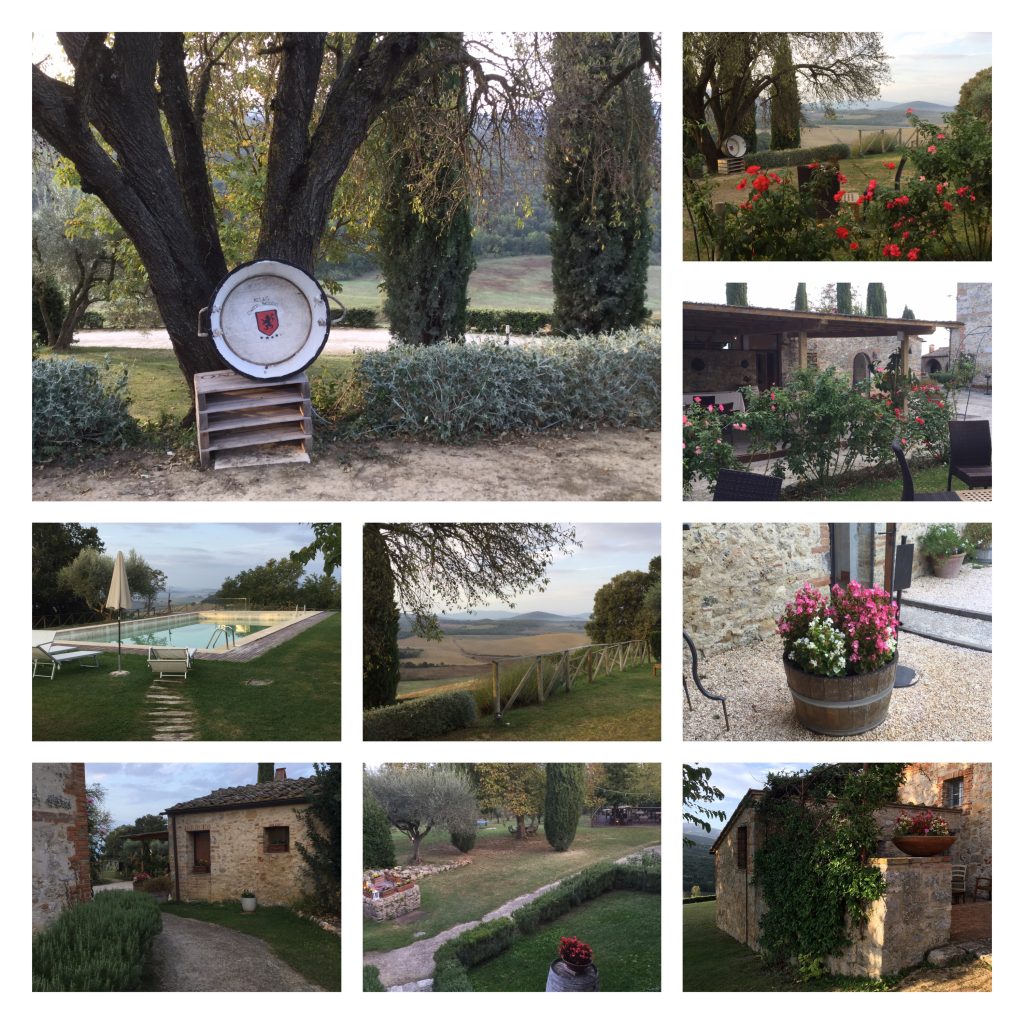
They have an outdoor swimming pool, Wellness Centre with spa and a delightful patio to enjoy your breakfast al fresco.
Salumificio Gozzi
The production of Prosciutto Toscano is a pillar of the Tuscan cuisine with roots going back to the Middle Ages however it was in the time of the Medici family that the production of Prosciutto Toscano started to be regulated and this regulation continues to this day.
We visited Salumeria Gozzi who took us through the whole process of producing Prosciutto Toscano PDO. For example the climate, story and territory make this prosciutto so special as well as the detailed procedure each leg of pork goes through to ensure the quality. What the pigs eat also has an effect on the final taste such as juniper berries, garlic, pepper and rosemary.
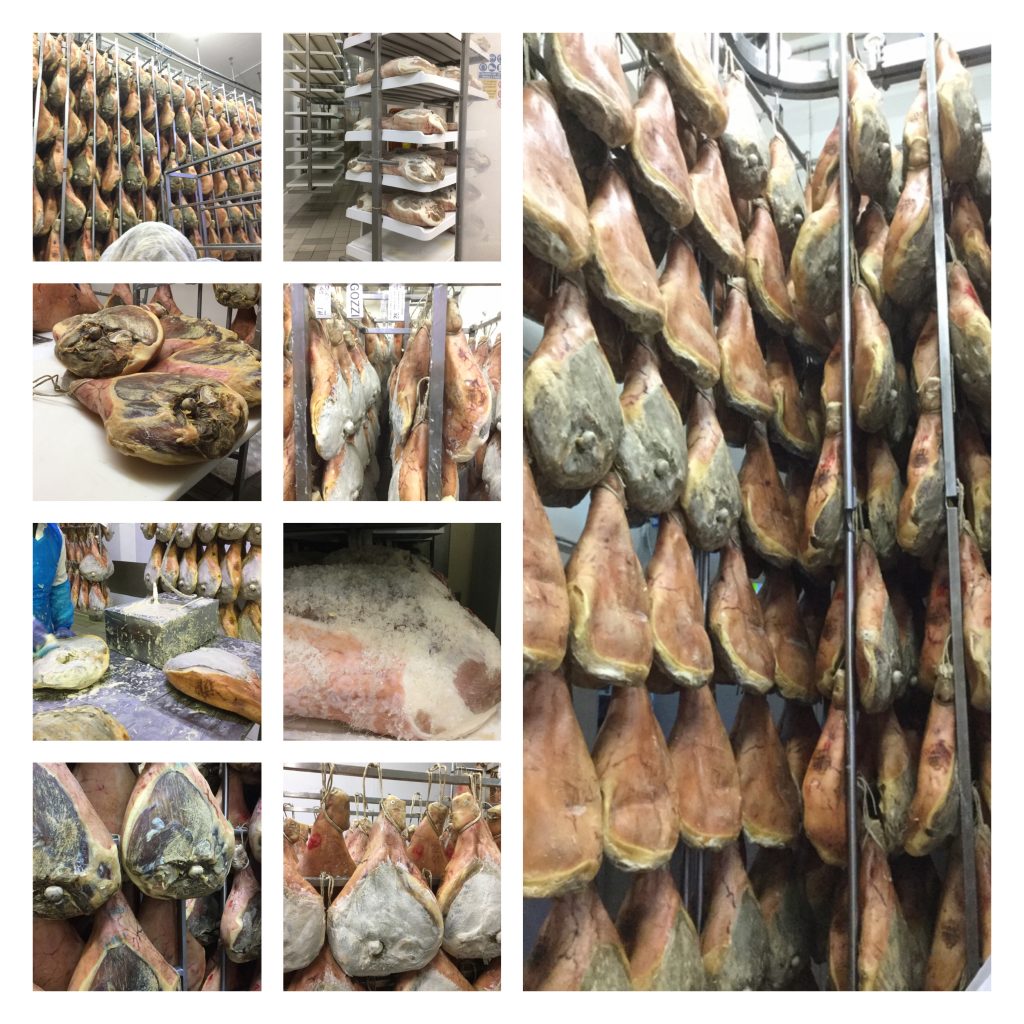
Selection Process, Salting Process, Pre-ageing Process, Smearing Process, Curing Process and finally the Spiking or Fire Branding Process
All of which ended up with us tasting this fantastic product, served of course with some local Pecorino cheese and Chianti Classico red wine.
Caseificio SOLP
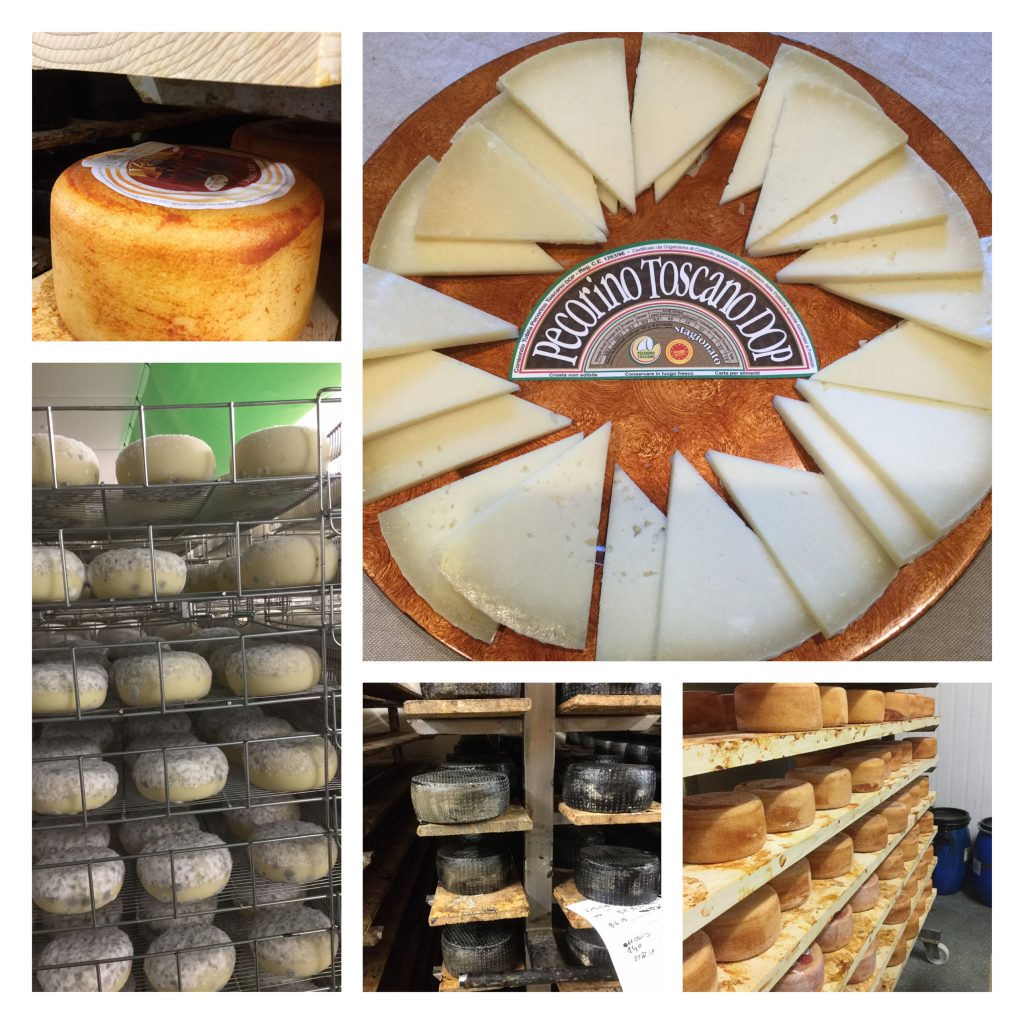
Another very important product in the Tuscany region is Pecorino Toscano PDO cheese. Under the watchful eye of the Pecorino Toscano PDO Protection Consortium you know that every slice, every bite will conform to the rules set out and will ensure quality, taste and origin.
We visited Caseficio SOLP. In the 1970s the original dairy was a small building and as they couldn’t go high due to local regulations they went wide and flat!! Only local milk arrives each day via 5 milk tanks which is then tested to ensure it is pure sheeps milk (from Sardinian sheep).
The moment you walk into the production area the warmth and smell of dairy temporarily hits you however you are soon so absorbed in the interesting steps in the production that you completely forget where you are.
The milk goes through many stages from arriving as fresh sheeps milk, heating to kill bacteria, seperating the curds from the whey (Little Miss Muffett didn’t separate them!), putting the curds into the containers until they loose up to 40% of their water weight, going to the hot room then the cold room and all this on day one!
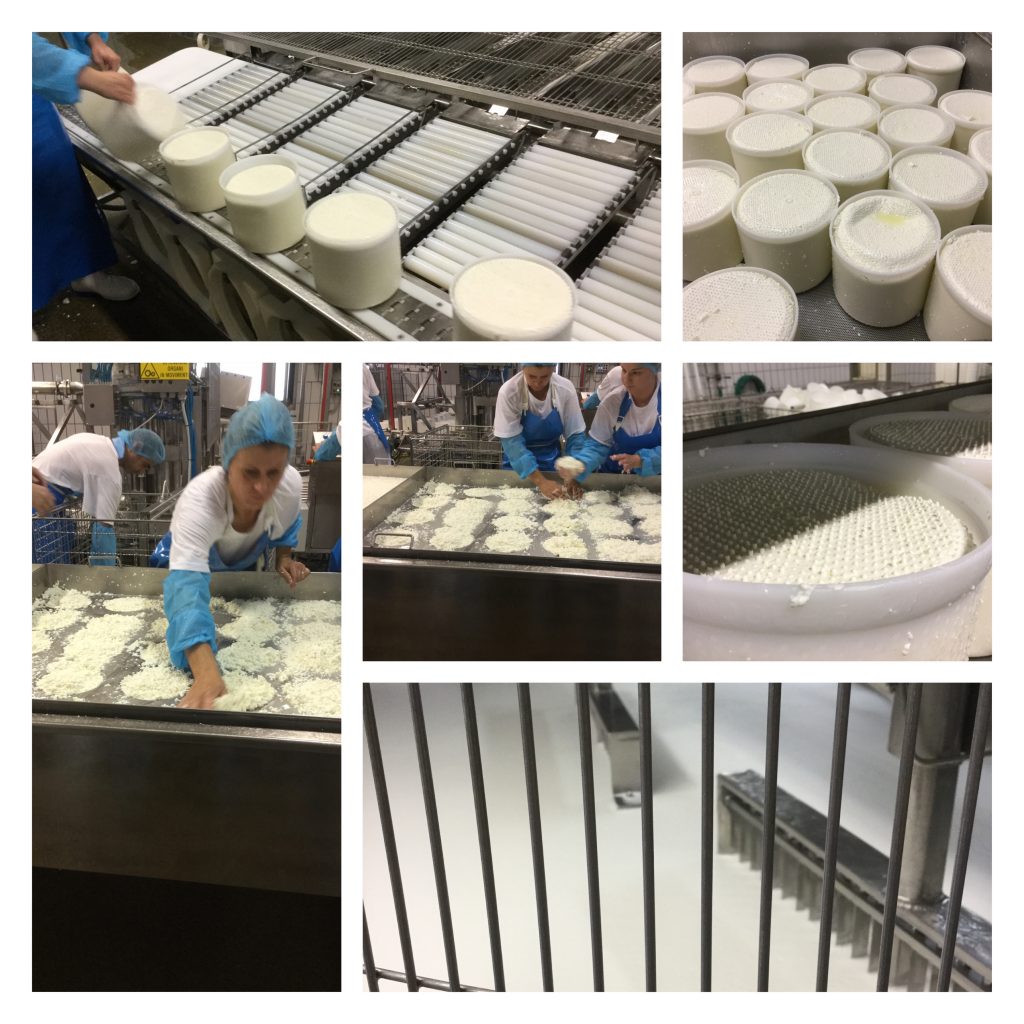
From day 2 begins with them being salted by hand in the traditional way, moved into another room for the proper crust to begin until 25 days later when the cheese is complete and treated either with ash, olive oil or tomatoes to preserve. They get their DOP mark, consortium stamp and date stamp and then anything between 20 days to 4 months to be ready for the outside world!
Terme Antica Querciolaia
To take the waters here at Terme Antica Querciolai is to relax and let nature do it’s job. The temperature of the three pool range from 28 degrees C to 36 degrees C and 38 degrees C is as it comes out of the ground. It helps with healing, breathing, skin conditions such as psoriasis and even mild arthritis.
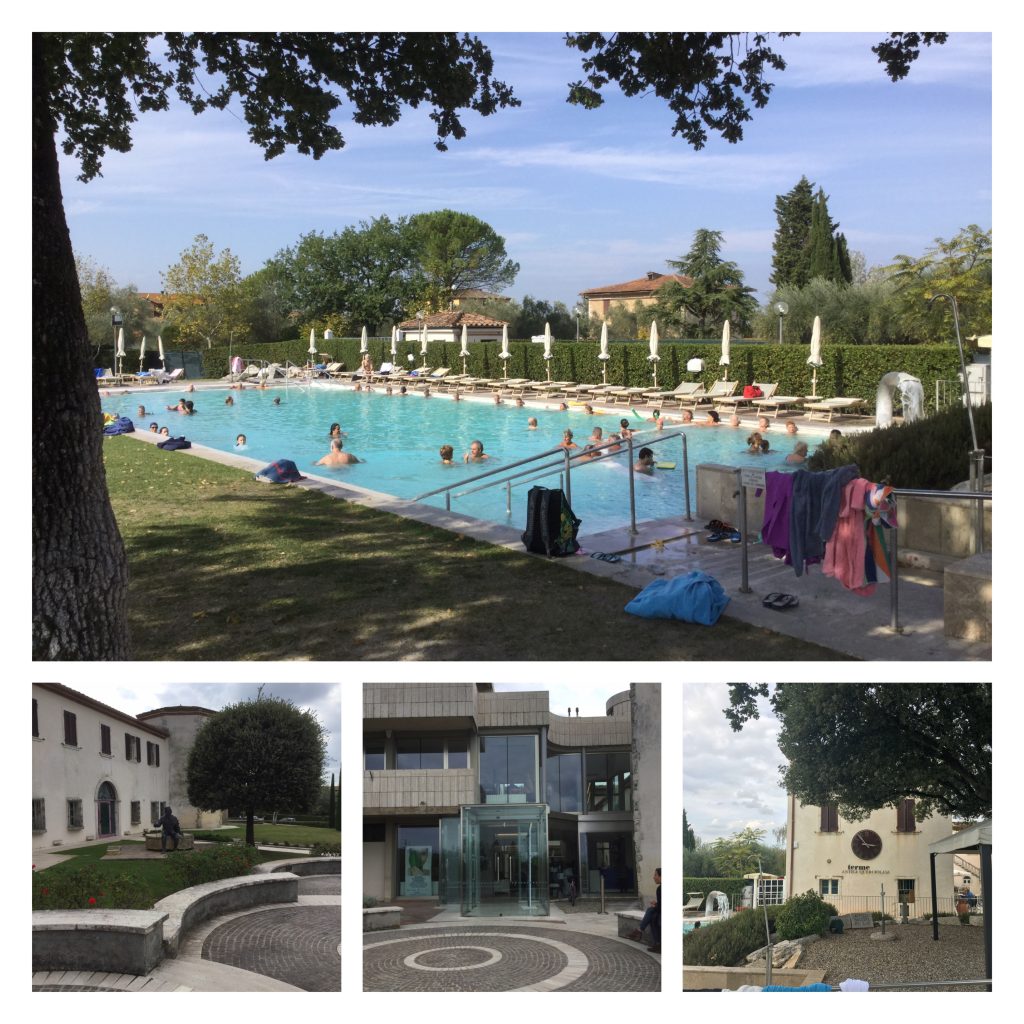
Starting as public baths it is said that Italian hero Guiseppe Garibaldi, defeated at the battle of Aspromonte in August 1862,to heal his battle wounds however a law in 1997 forced t to privatise so now it is somewhere between a private and public establishment. Originally a healing mud bath the first pool was constructed in the 1990s.
The facilities include a restaurant where we enjoyed a light and very delicious lunch.
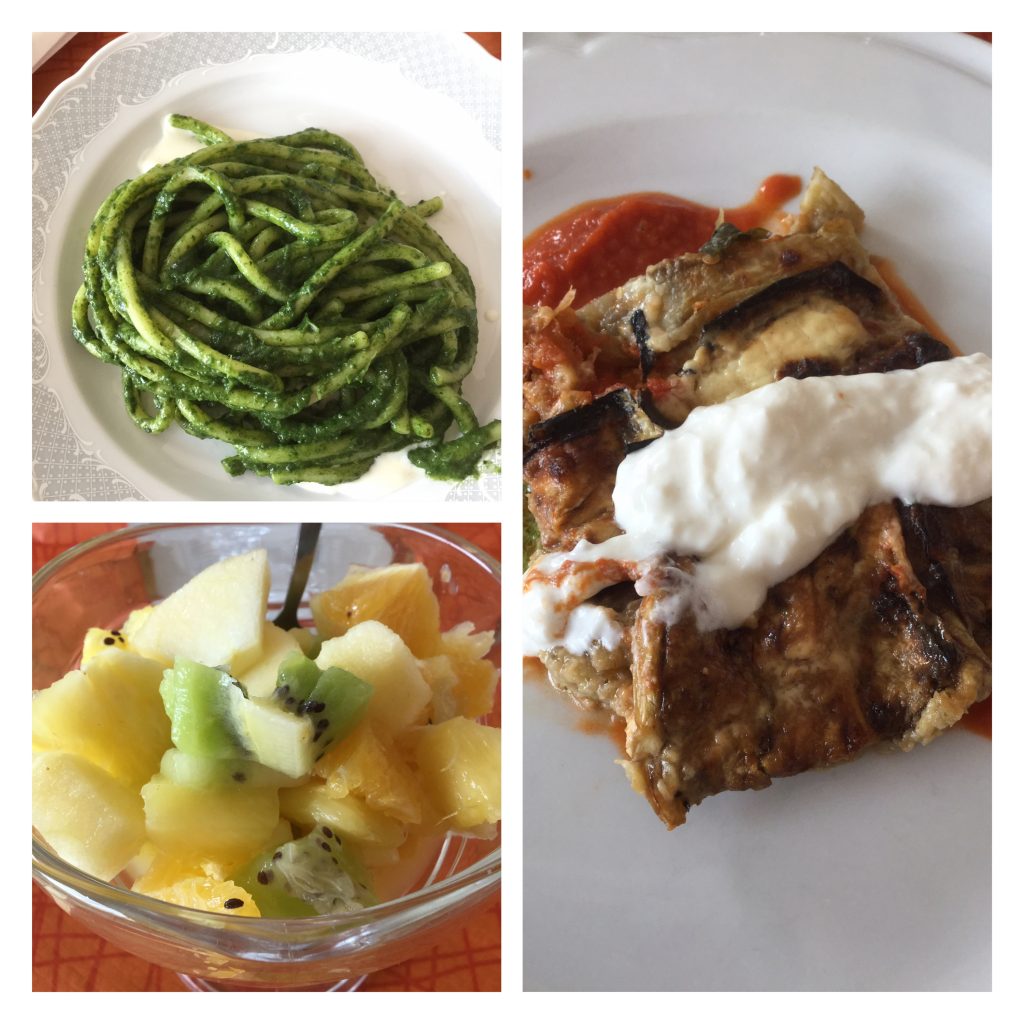
We left feeling refreshed and revitalised and ready for an afternoon snooze.
Tenuta di Lilliano
This winery will celebrate it’s 100th birthday in 2020 and is run as a winery for the 3rd generation.The original wine made at Tenuta di Lilliano was in 1958 and in the cellar they keep a couple of bottles of wine from each year. They recently tried a 1958 and it was as good as the day it was bottled!
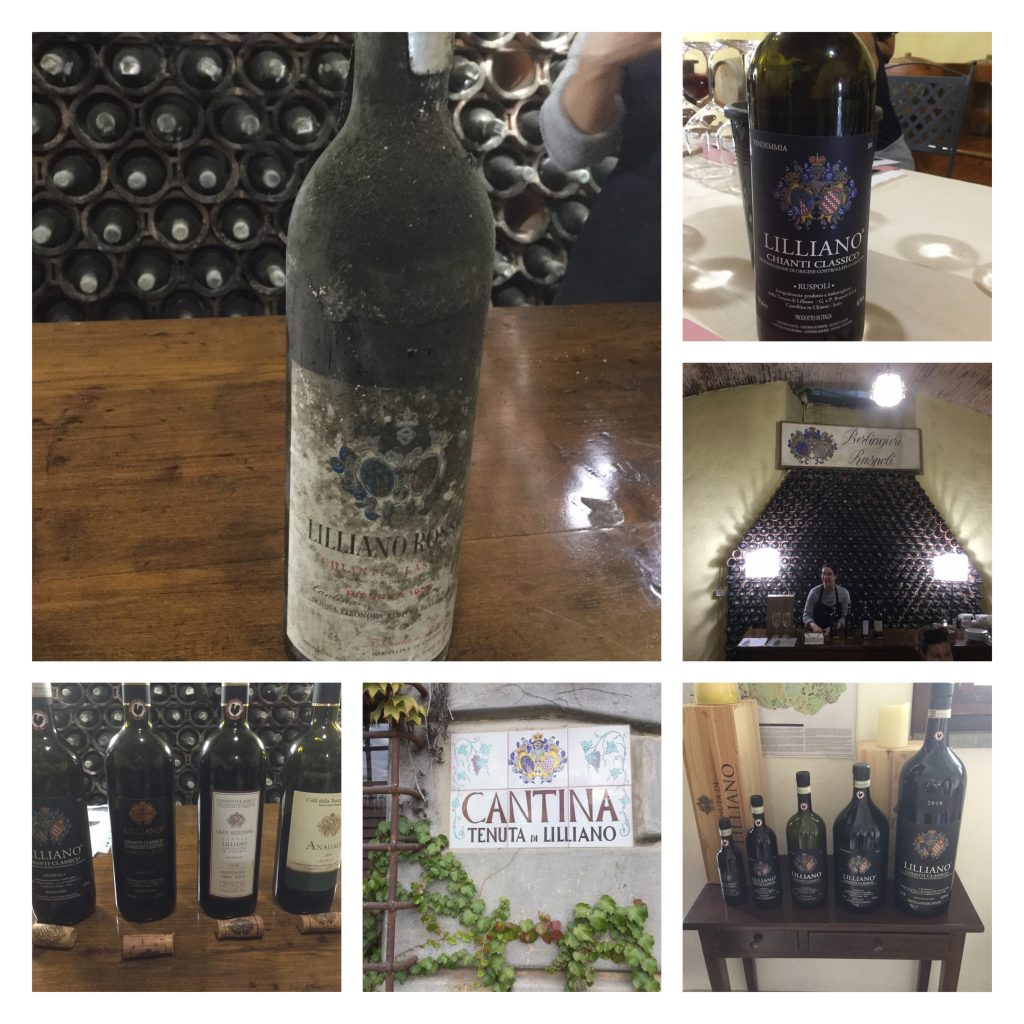
The soil in the area is perfect to grow the Sangiovese grapes essential for the production of Chianti Classico – the wine must be at least 80% Sangiovese. The grapes are like wild animals not wanting to be tamed and very sensitive to their growing soil which Tuscany is perfect.
Lilliano’s Chianti Classico, Chianti Classico Gran Selezione and Chianti Classico Riserva all hold the DOCG classification and proudly display the Black Rooster label on the bottle neck which guarantees quality and origin that it has been grown, produced, bottled and aged in the specific area designated Chianti Classico.
Felsina Winery
We visited a second winery Felsina bought in 1966 by the Poggiali family who made a decision to make a 100% Sangiovese wine. We tasted their superior wines characterised by the diversity of the soils and microclimates here in the South East corner of Chianti Classico. Their vineyards are about 200-700 metres above sea level.
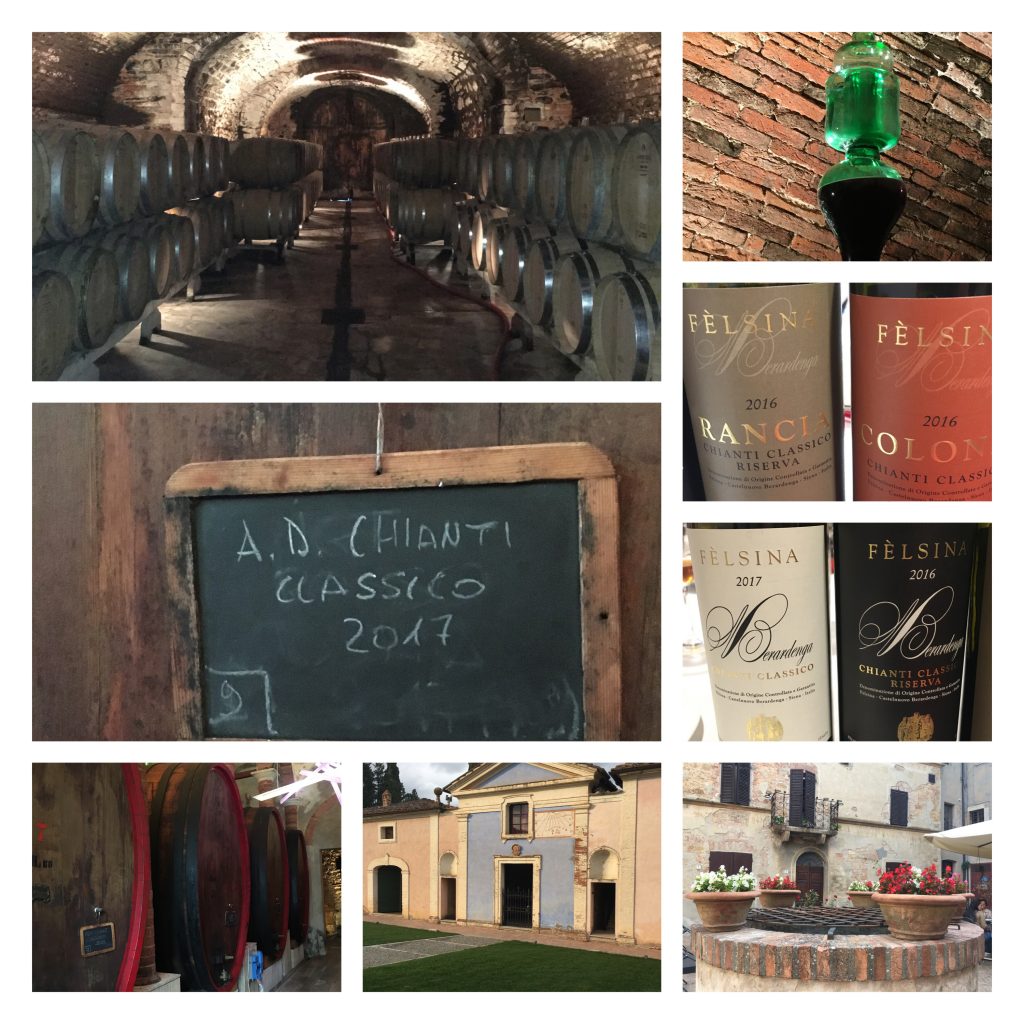
The Felsina area had its origins in Etruscan times first as a granary then a stop on the pilgrim’s way (around 1132 ) when it was known for it’s hospitality then later as a stables. Since the Poggiali family have owned the land they now have 90 hectares of vineyard which is used to make the smooth and delicious Chianti Classico wines.
One of their special wines is the Vinsanto – red grapes which are dried to raisins on straw mats then pressed. The minimal amount of juice that is then created is sweet and with passion and patience made into this lovely after dinner/dessert wine.
Felsina Winery also produces an Extra Virgin Olive Oil from their 6,000 olive trees. There are over 300 varieties of olives in Italy but they use four – Pendolino, Leccino, Moraiolo and Raggiolo – each producing a very different oil high in polyphenols and antioxidants. The oils are harvested and within 24 hours turned into liquid gold!
Historical Centre of Pienza
Pienza is a beautiful village with lovely buildings, loads of places to eat and places to have coffee. This village is full of history too. Pienze means City of Pius after Pope Pius II who was born in Pienza around 1500. Pope Pius II wrote a book about a United Europe – the first time the idea was mentioned!!!
Pienza was the 1st idea of a Renaissance City and in 1996 named a World Heritage Site based on its beauty.
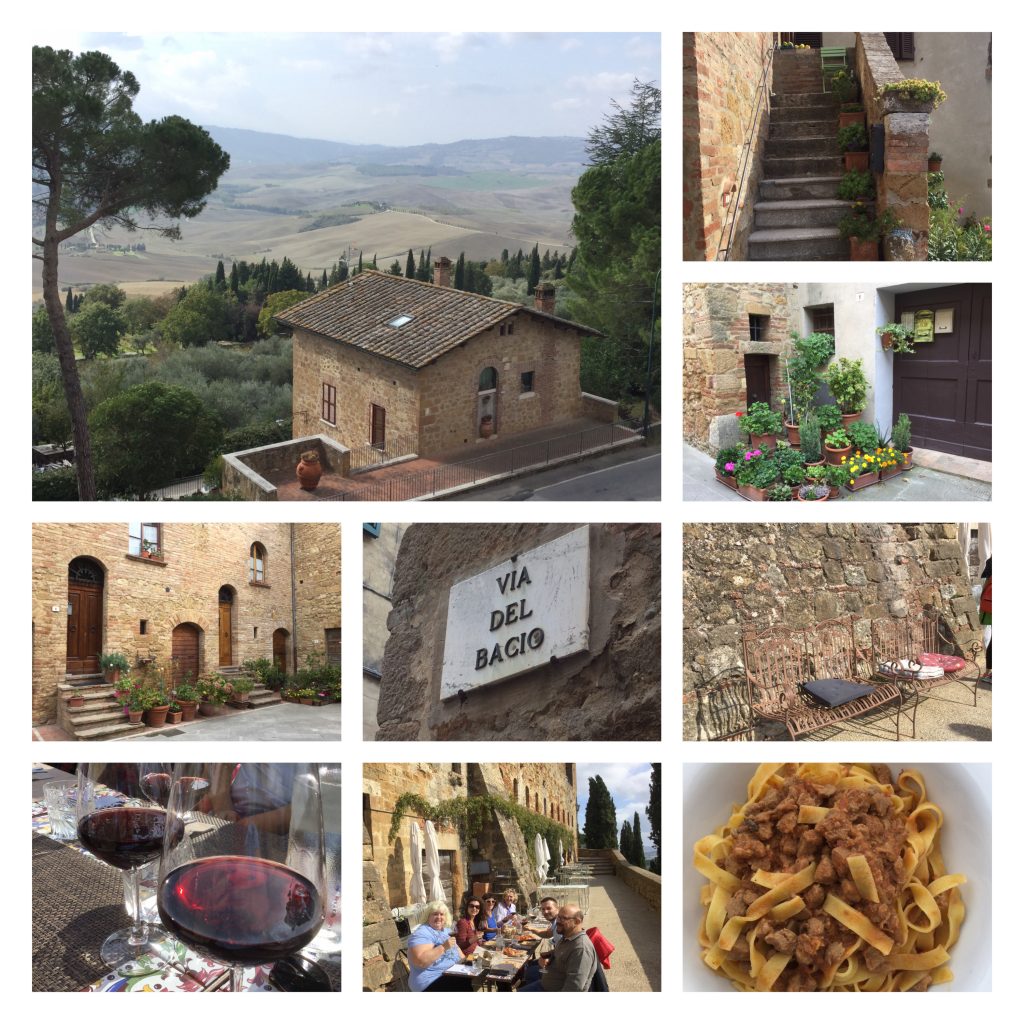
It was also the site of the first public housing ever and they are still inhabited. The residents don’t have back gardens but with their love of flowers tumbles out onto the streets!
Monteriggoni Castle
High up on one of the hills lies Monteriggoni Castle. Built between 1213 and 1219 it is an incredible well preserved walled city of the Middle Ages.
The central square is home to the Church of Santa Maria Assunta and right next to the restaurant Antica Trattoria La Torre (see details below).
I would love to re-visit in July to attend the Medieval Festival of Monteriggoni when you go back in time to experience medieval flavours of wine and food!
Restaurants
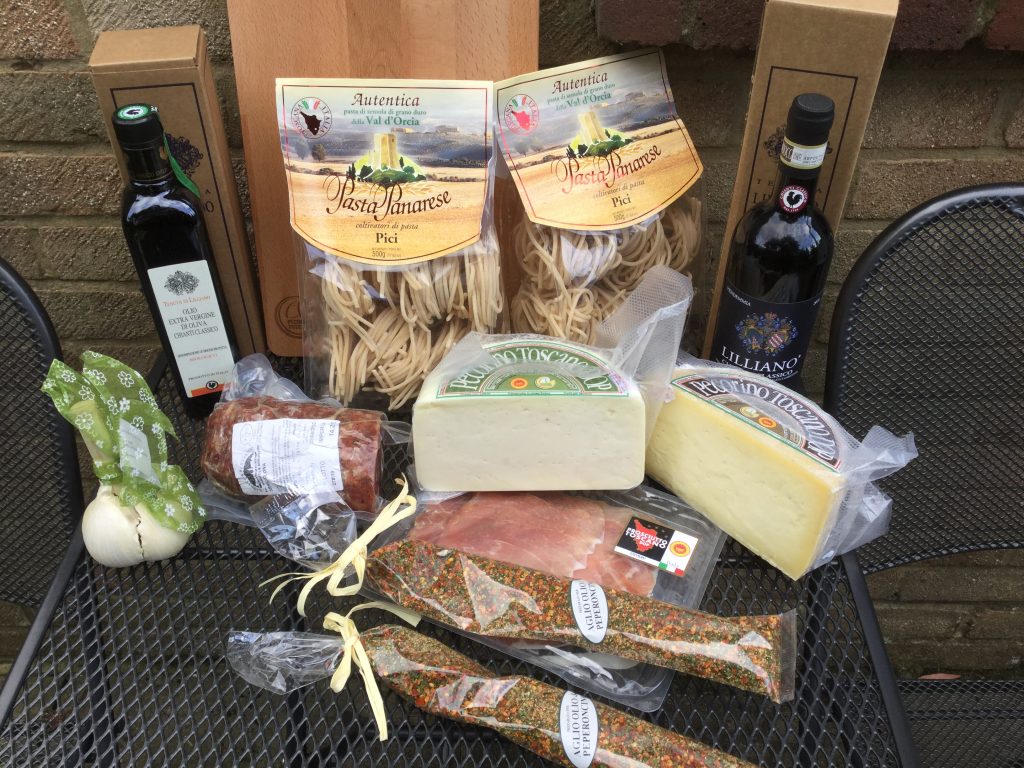
We ate at some really traditional Tuscan restaurants with local specialities. One of the specialities is a pasta called ‘Pici’ a kind of really thick spaghetti and said to be the parent of spaghetti as we know it today. Pici is still a very important part of the Tuscan diet. I brought some home with me so when I cook it I will share on my social media pages so keep an eye open for this! Thick tagliatelle with a slow cooked ragu sauce was also a popular meal.
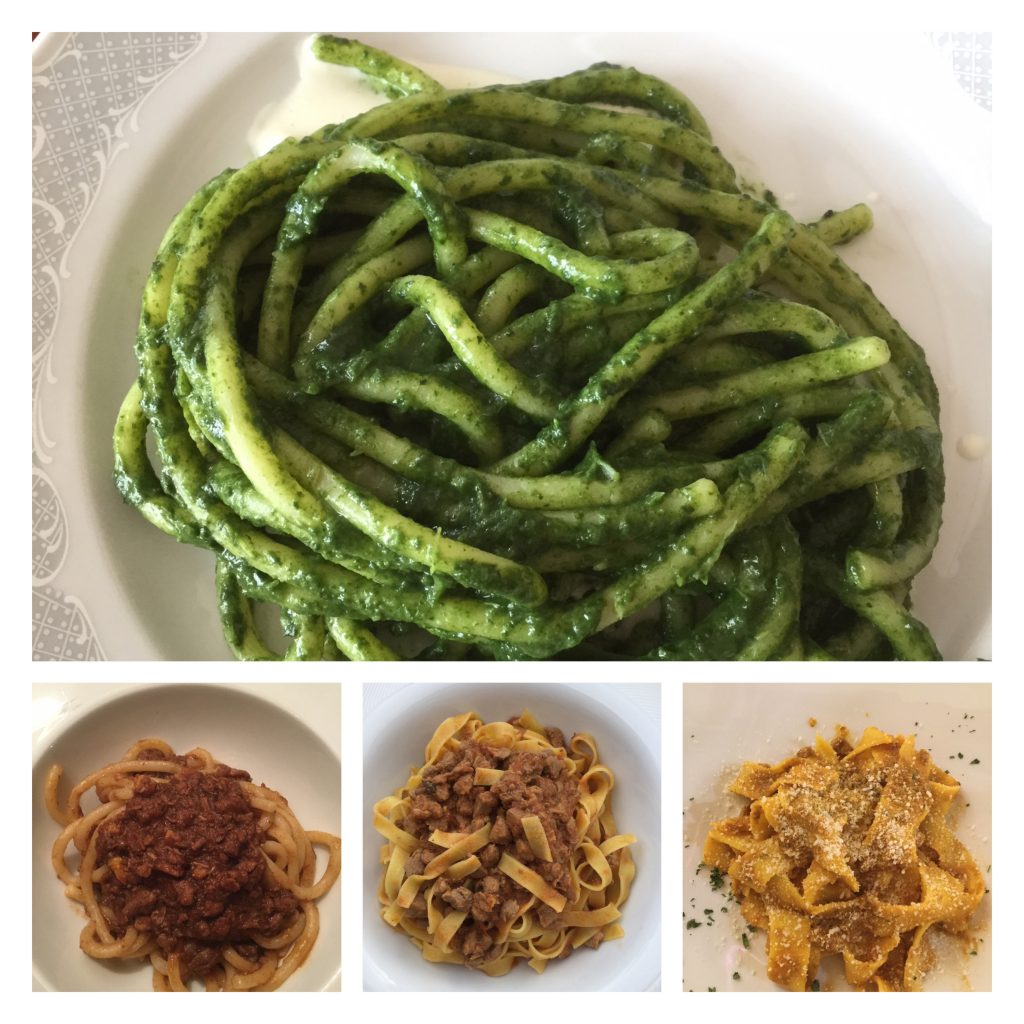
Here are some of the restaurants we visited and which I can recommend to you for a true Tuscan culinary experience.
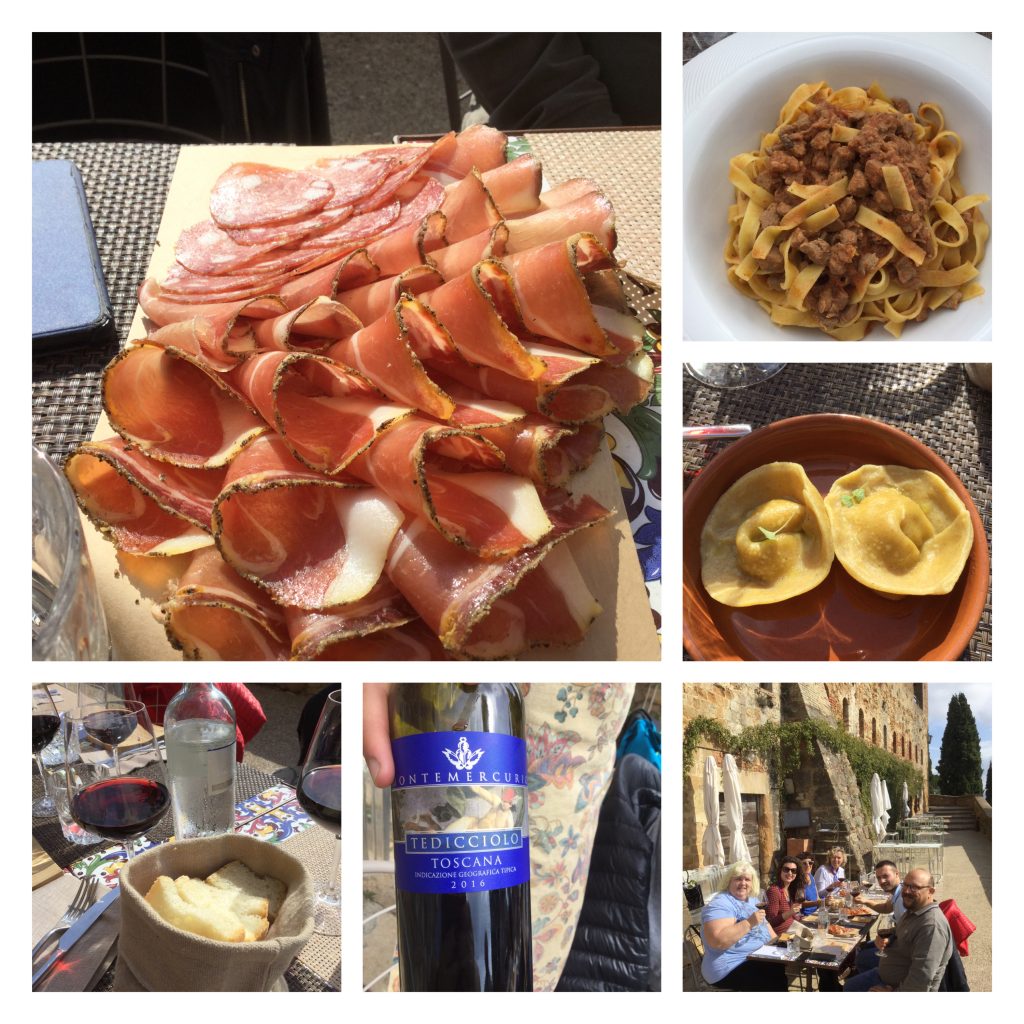
Idyllium in Pienza – treated us to a beautiful view and delicious Chianti Classico while they served our lunch of a cold meat platter to start, tortellini with mushrooms and tagliatelle with a slow cooked duck rage.
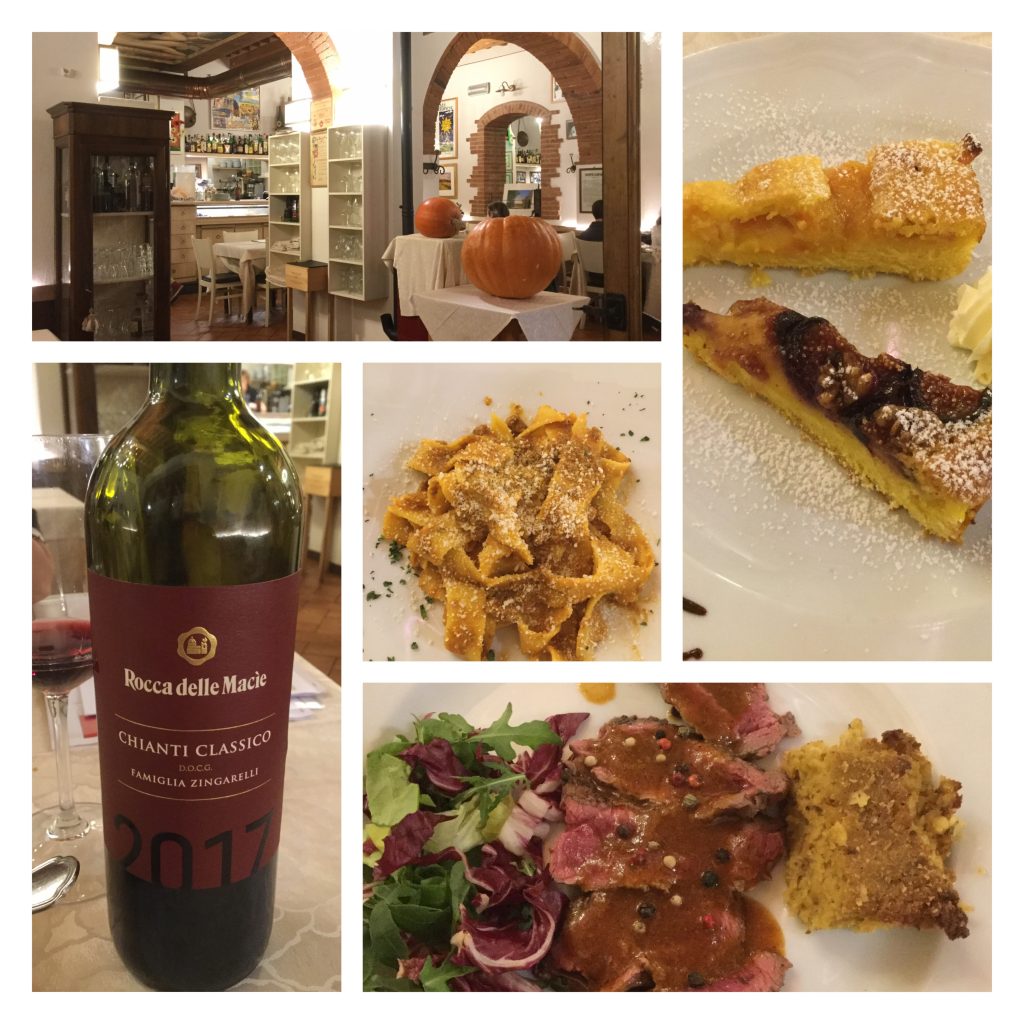
Antica Trattoria La Torre in Castellina in Chianti is a family owned restaurant where four generations have dedicated themselves to providing their guests with typical Tuscan dishes using local ingredients wherever possible. We enjoyed delicious wine, tagliatelle ragu, steak with a peppercorn sauce and two delicious tarts to round off the meal perfectly!
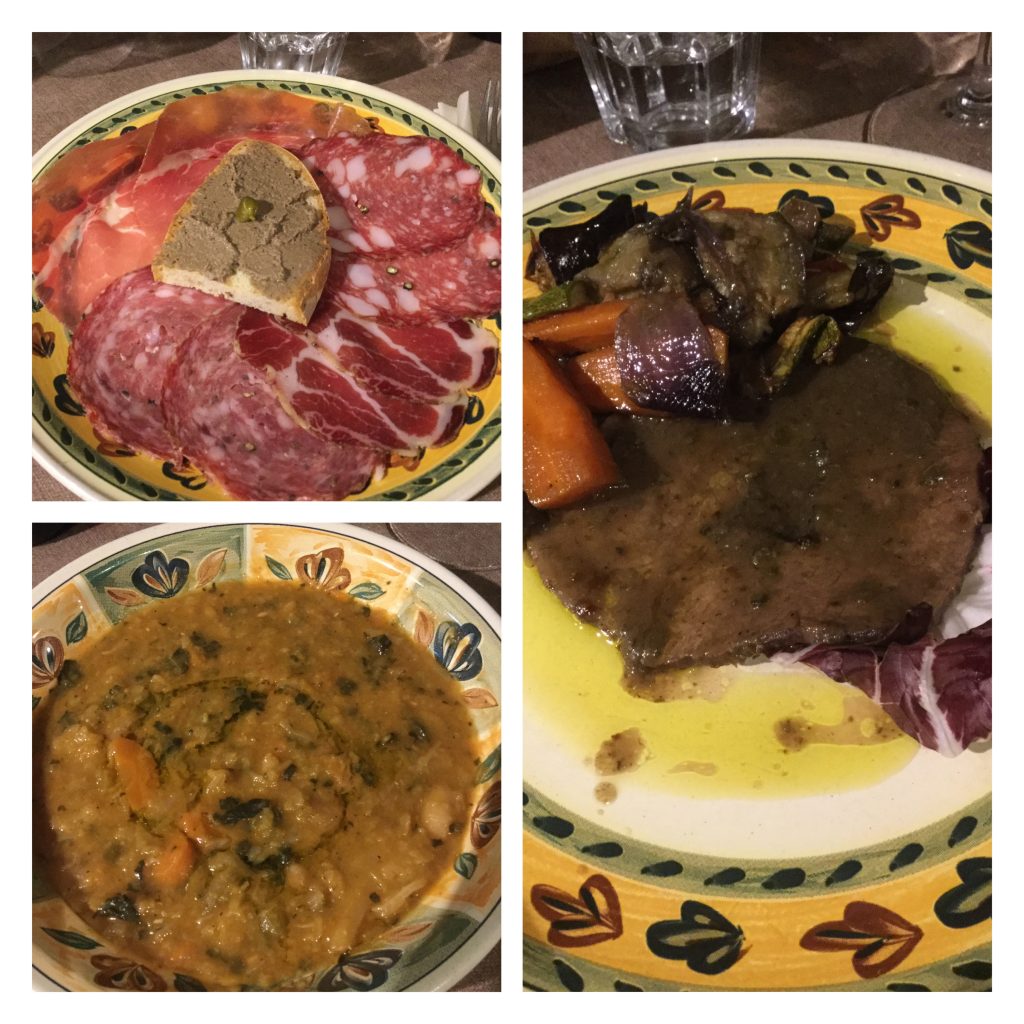
Osteria – Gelateria Antico Travaglio opens from a small piazza Gelateria (ice cream) into a delightful, homestyle restaurant serving really local dishes – we started again with a cold meat platter (always proud of the Prosciutto Classico), a liver pate on toast, chunky soup called Ribollito with red onion and Stracotto – a very long cooked beef dish.
You will not be disappointed if you have the opportunity to spend a couple of days in the Sienna area of Tuscany. I for one can’t wait to go back! And of course I bring loads of local products home with me to cook for the family and as well as bringing back memories it reminds me of the stories I need to tell them about the trip! Do you bring food and drink home from your trips?
This post is one of a series of how to spend 48 hours in an exciting city/town or area. Have a look at a couple of other posts. Let me know if there are any places you recommend. Coming soon ‘Germany: 48 hours in Hamburg’ and ‘Greece: 48 hours on the Athenian Riviera’ so keep a look out for these too.
I was invited to visit by the Consortiums, Olio Chianti Classico DOP, Prosciutto Toscano DOP, Pecorino Toscano PDO and Vino Chianti Classico DOCG who wanted to introduce us to the experience of Italian cuisine, art, history and culture and traditions. If you get to the region you can arrange to visit the following places for a real Tuscan experience. I know you will love it – I did!


