
Dehydrating – How to Preserve Fruit and Vegetables
Dehydrating – How to Preserve Fruit and Vegetables

Humans all over the world have been preserving food over the years that is abundant in the good seasons for the harsh winter.
What can be used to preserve food:-
There are many different methods used in order to preserve food for consumption at a later date. Salt, vinegar, heat, smoke, ice, alcohol and air are the most popular ways. I have been in favour of preservation for years and have tried many of these ways. Most of them can be done commercially or on a smaller basis in your own homes.
Ways I have tried to preserve food:-
Freezing-
One of the most basic ways is by freezing food for consumption at a later date. Most modern day refrigerators have freezer compartments from small ones to hold just a few essentials along with ice for the gin and tonic at the end of the day to tall units with half fridge and half freezer for the larger family. And of course you can buy stand along freezers which are extremely useful for gardeners, home cooks and large families. Most foods can be frozen for up to three months in a domestic home freezer.
Alcohol-
Alcohol is a very popular way to preserve food. It was used for long ship journeys to ensure food for the passengers and crew stayed fresh and edible for the duration.
Fruit such as blackberries, peaches, plums as well as dried raisins, apricots and prunes have all been preserved in brandy or rum in the autumn, typically October, for use in fruit cakes, spooning over ice creams and just an indulgent dessert!
This was a very popular way to preserve fruit in Eastern Europe in large stoneware containers. In Germany they call the container a Rumtopf.
Salt-
Fermenting is a way to preserve vegetables using a large jar or ceramic pot, water and salt. You need to get the ratio of salt to water right. Too little salt and the food will spoil and too much salt will result in the final food being way to salty to enjoy.
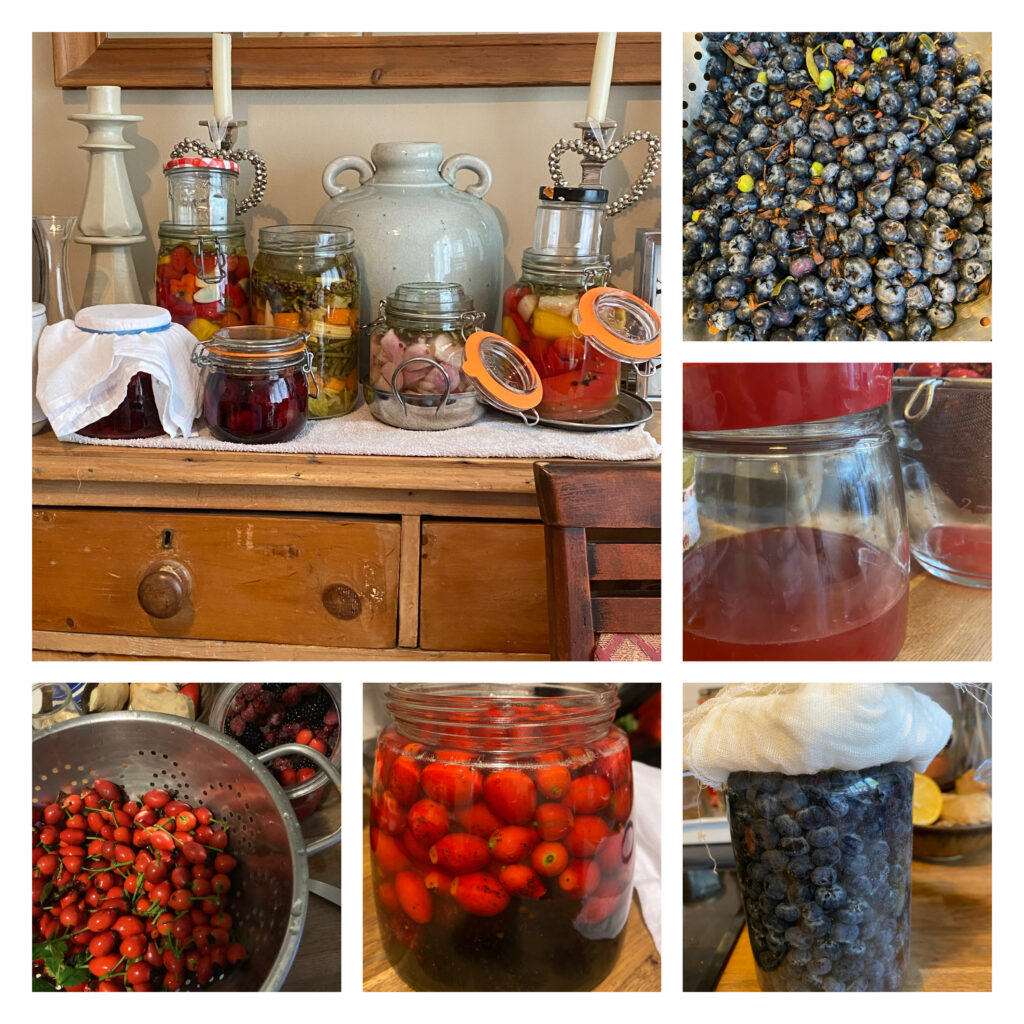
I often have jars of fresh produce, especially grown on our allotment, fermenting away on the sideboard or counter top.
Sauerkraut is another favourite of mine to make at home. You need cabbage, salt, water and a large jar or ceramic pot plus time. Sauerkraut can be ready in 5-10 days or weeks. I like to leave mine 3-4 weeks to fully develop that sour taste.

Vinegar-
Vinegar is used to pickle foods. Cucumbers pickle extremely well and can be found in most countries around the world. You can pickle most vegetables and over time I have pickled cucumbers, beetroot, green beans and hard boiled eggs to name a few. Usually some spices, often called pickling spices, which includes peppercorns and coriander seeds are included in the liquid.
For the first time this year I decided to make my own vinegar using the natural yeasts that exist in our air. I made a blueberry vinegar as well as a reship & raspberry vinegar both of which turned out really tasty.
Air/Heat:
My new experiments are using air or things that take the moisture out of the fruit and vegetables with air and heat. I was given a dehydrator for last Christmas from Mr R so I could begin my next challenge.
The dehydrator slowly draws the moisture out of the items you place inside. Without the moisture the fruit and vegetables will last for ages, especially if you keep them in an airtight container.
The list of things I plan on dehydrating includes, mushrooms, potatoes, tomatoes, raspberries and, well the list is endless.
One of the easiest things to dehydrate are citrus fruit. They take a long time to fully dehydrate but the wait is worth it. Thin slices of glass like circles.
Lemons and limes keep their fragrance and are perfect for dropping into a cocktail like lemon slice for a gin & tonic or thin slice of lime into a mojito!
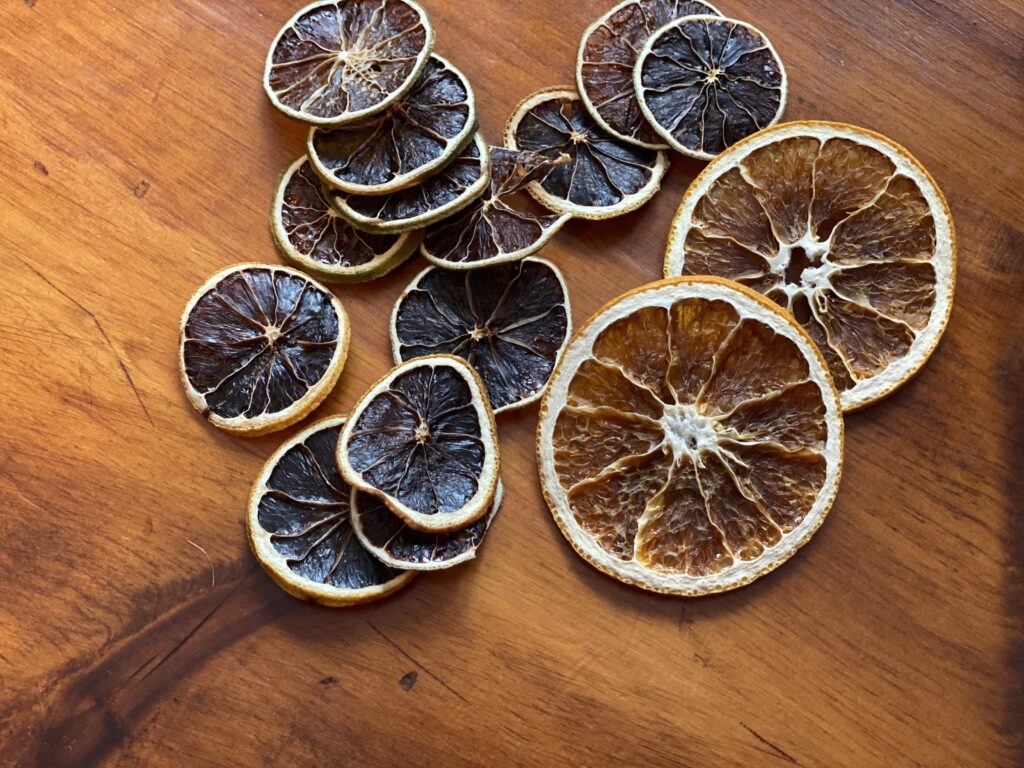
The slices are great to style a cocktail or put on top of a citrus drizzle cake – adding an extra finish.
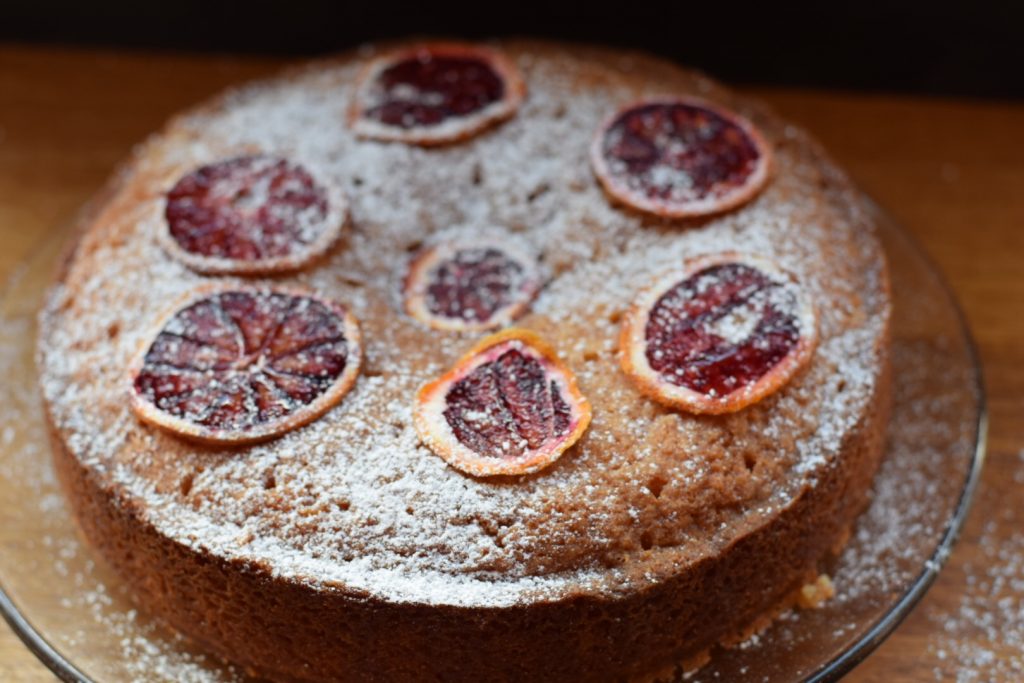
My latest citrus dehydration project was the beautiful but very seasonable blood oranges. Each orange has a deep red colour but with variations. When you slice into them when they are fresh the colours are so variable and beautiful however once dehydrated they are beautiful.

Have you tried preserving fruit and vegetables? Which of the above methods have you tried. Please leave a comment below to tell me how you got on.
A couple of recipes you might like:-


